Kiedy letnie upały powoli ustępują miejsca chłodniejszym wieczorom, a pola mienią się złotem, intuicyjnie czujemy zmianę energii. Dla współczesnego człowieka przełom sierpnia i września to po prostu koniec wakacji. Dla naszych przodków był to jednak najważniejszy moment w roku – czas, w którym ważyły się losy przetrwania całej wspólnoty.
Zanim na polskich wsiach pojawiły się oficjalne wieńce, orkiestry dęte i przemówienia dostojników, naszymi ziemiami rządził naturalny cykl wegetacji. Poznajcie Plony – przedchrześcijańskie Święto Plonów, pełne magii, transowej muzyki i głębokiej wdzięczności wobec sił natury. I choć czasy się zmieniły, to już niedługo wspólnie wskrzesimy tego ducha podczas nadchodzącego festiwalu Folkowe Ucho – Święto Plonów!
Matka Ziemia i Pan Podziemi: Komu dziękowali Słowianie?
W słowiańskim panteonie jesienne świętowanie było skierowane przede wszystkim ku dwóm potężnym siłom.
Pierwszą z nich była Mokosz – Matka Ziemia Wilgotna. To ona przez całą wiosnę i lato karmiła ziarno, chroniła je przed suszą i pozwalała mu wzrosnąć. Końcówka lata była momentem, w którym Mokosz oddawała swoje bogactwo ludziom, by chwilę później zasnąć na zimowy odpoczynek.
Drugim bohaterem tego okresu był Weles – bóg podziemi, magii, ale przede wszystkim bóg przysięg i bogactwa, które wówczas mierzono liczbą bydła i ilością zebranego ziarna. To właśnie jemu zostawiano symboliczny dar na polu, zwany „brodą Welesa” (lub „przepiórką”). Była to kępa nieskoszonego zboża, którą uroczyście przystrajano kwiatami i nasycano miodem, by zapewnić sobie przychylność bóstwa i urodzaj w kolejnym roku.
Rytuały pełne magii: Kołacz większy niż człowiek
Tradycyjne obchody Plonów nie były zwykłą biesiadą – każdy gest miał znaczenie magiczne i profetyczne (wróżebne). Kluczowym elementem święta był wielki kołacz – obrzędowy, okrągły chleb wypieczony ze świeżo zebranego i zmielonego ziarna.
Z kołaczem wiązał się fascynujący rytuał, który w Arkonie (potężnym ośrodku kultu na Rugii) odprawiał żerca (słowiański kapłan):
Kapłan stawał za ogromnym kołaczem i pytał zgromadzonych, czy go widać. Gdy lud odpowiadał, że tak, żerca wypowiadał życzenie: „Obyście za rok mnie zza niego nie zobaczyli!”. Nie chodziło tu o nagłe zniknięcie kapłana, lecz o życzenie, by przyszłoroczny chleb i plony były tak gigantyczne, że całkowicie go zasłonią.
Wróżono również z miodu pitnego nalanego do rogu posągu Świętowita – poziom płynu po całym roku przepowiadał, czy nadchodzący czas przyniesie dostatek, czy głód.
Ostatni Snop i narodziny dożynkowego wieńca
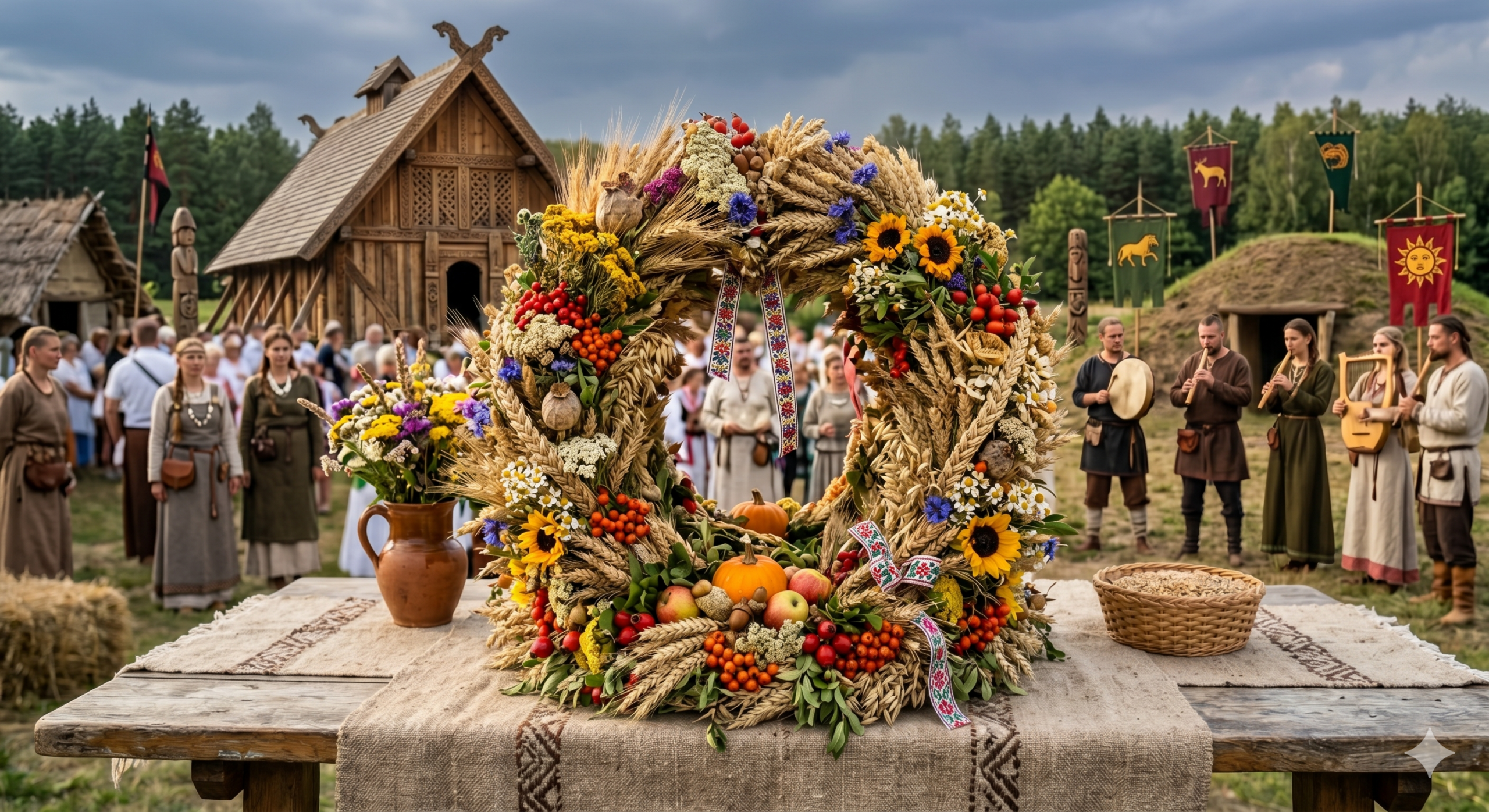
Współczesny wieniec dożynkowy, choć piękny, jest jedynie echem dawnego rytuału Ostatniego Snopa. Ścinany z wielkim szacunkiem na sam koniec żniw, snop ten (nazywany często Dziadem lub Plonem) był uroczyście wnoszony do chaty. Stawiano go w świętym kącie, gdzie stał aż do przesilenia zimowego. Wierzono, że kryje się w nim duch opiekuńczy pola i esencja życiodajnej siły.
Sam proces żniw i Plonów był niesamowicie muzyczny. Pracy na polu i późniejszym rytuałom towarzyszyły pieśni plonowe – monotonne, transowe, śpiewane pełnym głosem (śpiewokrzykiem), które niosły się po polach na kilometry. Dokładnie te same, transowe wibracje i potężne brzmienia bębnów poczujecie na żywo pod sceną Folkowego Ucha.
Dlaczego dziś potrzebujemy ducha dawnych Plonów?
W czasach, gdy jedzenie kupujemy w marketach spakowane w plastik, łatwo stracić kontakt z tym, skąd pochodzi nasza energia. Słowiańskie Święto Plonów przypomina nam o czymś niezwykle ważnym: o wdzięczności, powrocie do korzeni i sile wspólnoty.
Współczesna scena folkowa i neofolkowa doskonale to rozumie. Wracając do tradycyjnych instrumentów i transowych rytmów, nie uprawiamy jedynie rekonstrukcji historycznej. Odtwarzamy ten sam stan uniesienia i dzikiej radości, który towarzyszył naszym przodkom, gdy po miesiącach ciężkiej pracy mogli wreszcie usiąść przy wspólnym ogniu.
🎟️ Świętuj Plony razem z nami – Dołącz do Folkowego Ucha!
Nie musisz szukać wehikułu czasu, by poczuć magię słowiańskich Plonów. Już niedługo zapłoną festiwalowe ogniska, a przestrzeń wypełni się potężnym, neofolkowym brzmieniem, mrocznym transem i energią, której nie da się podrobić.
Folkowe Ucho – Święto Plonów to coś więcej niż koncerty. To spotkanie ludzi, którzy czują zew korzeni. Czekają na Ciebie najlepsi artyści sceny folkowej, niesamowity klimat i społeczność, która potrafi świętować z prawdziwym, słowiańskim rozmachem.
Liczba miejsc na to wyjątkowe świętowanie jest ograniczona, a pula pierwszych biletów właśnie znika z wirtualnych półek. Nie czekaj, aż zbiory dobiegną końca – zapewnij sobie miejsce pod sceną już teraz!
👉 [KLIKNIJ TUTAJ I KUP BILET NA ŚWIĘTO PLONÓW]
Do zobaczenia pod sceną – niech Weles darzy, a Mokosz sypnie dobrem!
Dodaj komentarz