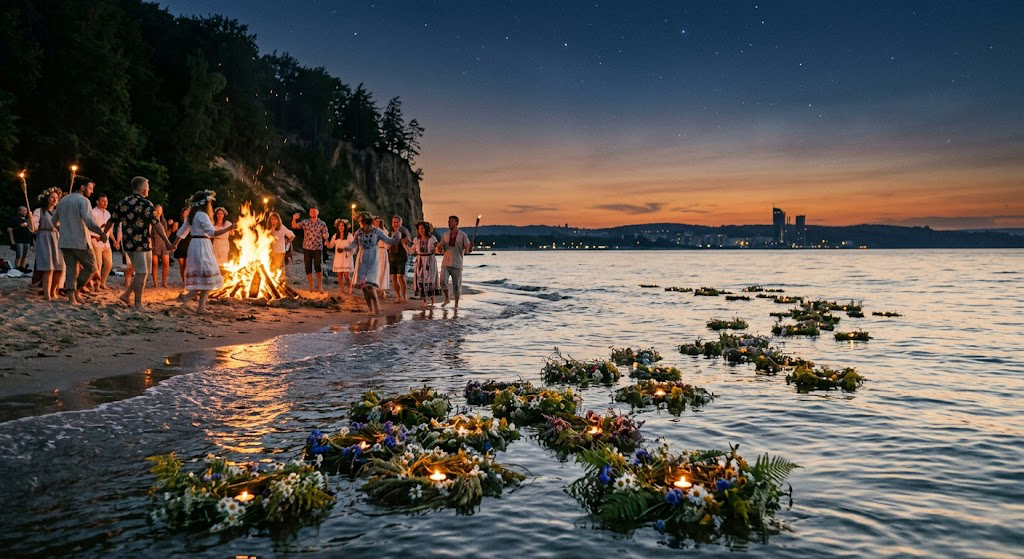
Czerwcowa noc, ogniska, wianki płynące z nurtem rzeki i aura tajemnicy. Noc Kupały to bez wątpienia najbardziej medialne ze słowiańskich świąt. Jednak wraz z rosnącą popularnością rodzimowierstwa i nurtu „folk”, wokół tego wydarzenia narosło mnóstwo nieścisłości. Czas oddzielić ludową prawdę od romantycznych fantazji.
Oto największe mity dotyczące Nocy Kupały, które warto zweryfikować przed zapaleniem tegorocznego sobótkowego ognia.
1. Kupała to słowiański bóg miłości
To jeden z najtrwalszych mitów, powielany nawet w starszych podręcznikach. Prawda jest jednak mniej barwna: nie ma dowodów historycznych na istnienie bóstwa o imieniu Kupała. Średniowieczni kronikarze, widząc ludowe obrzędy, często personifikowali ich nazwy, tworząc „bogów” z nazw świąt. Etymologia słowa najprawdopodobniej pochodzi od indoeuropejskiego pierwiastka kump, oznaczającego zbiorowość, bądź od słowa „kąpiel” (związanego z rytualnym oczyszczeniem).
2. „Noc Kupały” i „Noc Świętojańska” to dokładnie to samo
Choć dziś używamy tych nazw niemal zamiennie, historycznie to dwa różne punkty w kalendarzu. Noc Kupały (Sobótka) przypada na najkrótszą noc w roku (ok. 21/22 czerwca) i ma korzenie solarne. Noc Świętojańska to wigilia św. Jana (23/24 czerwca). Kościół, nie mogąc wykorzenić silnych pogańskich tradycji, dokonał ich asymilacji, przesuwając obchody i nadając im chrześcijańskiego patrona.
3. Kwiat paproci naprawdę istniał jako roślina
Wielu poszukiwaczy „perunowego kwiatu” zapomina o jego symbolicznym wymiarze. W mitologii słowiańskiej kwiat paproci nie był elementem botaniki, lecz metaforą mądrości, ukrytego skarbu i oświecenia. Według legend ukazywał się tylko osobom prawym, a jego odnalezienie wiązało się z ogromną odpowiedzialnością.
4. To był festiwal niekontrolowanej rozwiązłości
Popularny obraz Nocy Kupały jako czasu chaosu jest mocno przesadzony. Choć faktycznie była to noc większej swobody, a młodzi mogli łączyć się w pary bez pośrednictwa swatów, obrzędowość była ściśle uregulowana. Był to czas rytualnego przejścia. Skakanie przez ognisko czy wspólne tańce miały charakter magiczny i oczyszczający, a nie wyłącznie rozrywkowy.
5. Słowianie obchodzili Kupałę tylko w głębokim lesie
Choć las i rzeka to naturalna sceneria, najważniejszym punktem odniesienia była wspólnota. Ogniska rozpalano na wzgórzach (często zwanych Sobótkami), w miejscach widocznych dla całych osad. Nie była to wyprawa w nieznane, lecz wielkie, publiczne święto integrujące społeczność.
Chcesz poczuć energię przesilenia w Gdyni?
Teoria to tylko wstęp – najlepiej doświadczyć tej magii w praktyce, łącząc dawną symbolikę ze współczesną wrażliwością. W Folkowym Uchu nie bawimy się w skansen ani sztywne rekonstrukcje. Zamiast odtwarzać przeszłość, nadajemy jej nowe życie, łącząc folkowe brzmienia z dzisiejszą energią i miejskim klimatem.
Jeśli szukasz autentycznych emocji, mocnych koncertów i warsztatów, które przekładają tradycję na język XXI wieku, sprawdź nadchodzące wydarzenia na Noc Kupały w Gdyni organizowane przez Folkowe Ucho. To tutaj, nad samym morzem, świętujemy najkrótszą noc w roku tak, jak czujemy ją dzisiaj – głośno, wspólnie i z szacunkiem do naszych korzeni. Nie znajdziesz lepszego miejsca na mapie Trójmiasta, by poczuć ten klimat!
Noc Kupały to fascynujące święto życia i potęgi natury. Odarcie go z narosłych mitów pozwala docenić logikę i głębię wierzeń naszych przodków. Tegorocznego czerwca, patrząc w ogień, pamiętajmy, że świętujemy triumf światła nad ciemnością.
Dodaj komentarz