
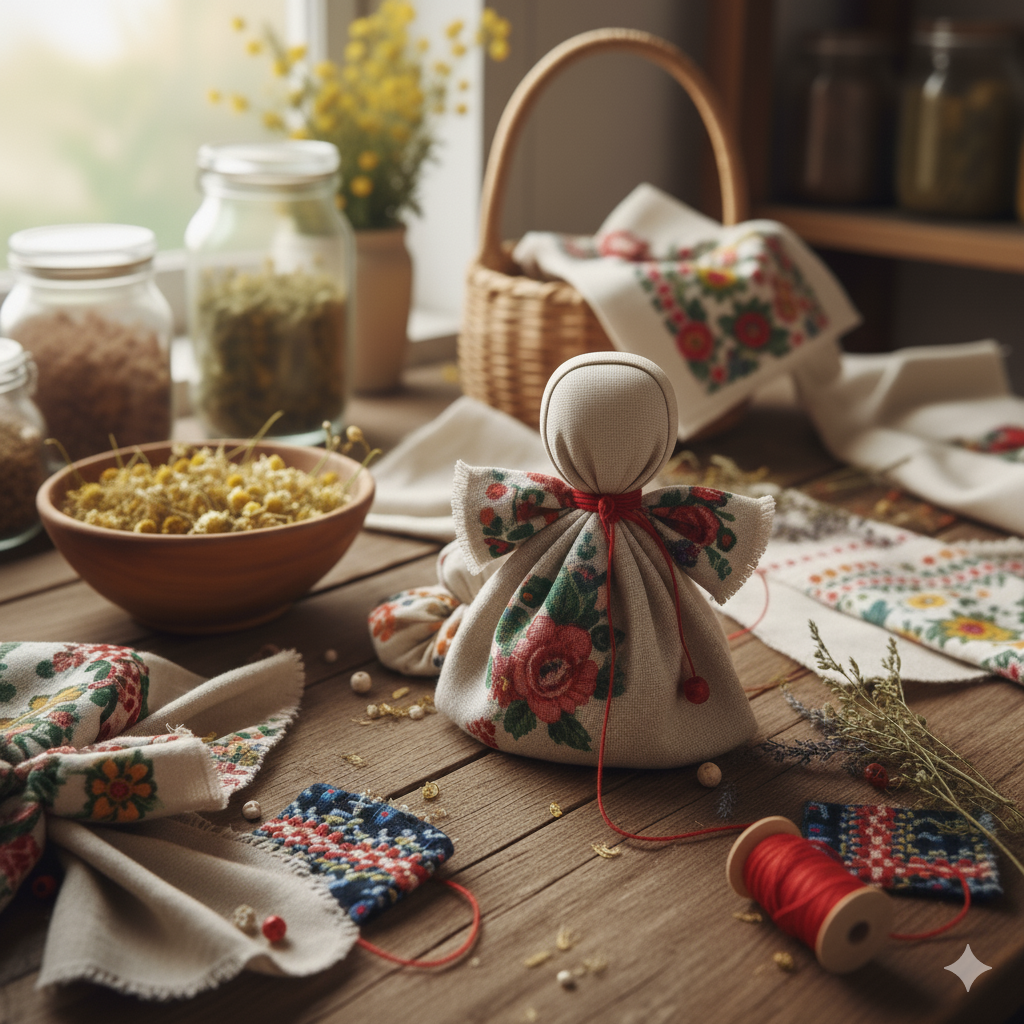
Motanki to nie są zwykłe lalki, lecz pradawne słowiańskie amulety, splecione z intencją, historią i magią, która przetrwała wieki. Wykonane ręcznie, bez użycia igły i nożyczek, zyskały miano „lalek dobrych życzeń” oraz „lalek mocy”. To nie tylko piękne przedmioty, lecz także lalki będące zarówno cichymi strażniczkami domowego ogniska, jak i osobistymi talizmanami naszych przodkiń.
Korzenie Motanek: Skąd wzięły się lalki bez twarzy?
Nazwa „motanka” pochodzi od ukraińskiego słowa „мотати” (motaty), co oznacza „owijać” lub „pleść”. Ta technika jest kluczowa ponieważ motanek się nie szyje, a właśnie mota i wiąże ze skrawków materiału, lnu, nici i wełny.
-
- Pochodzenie i Historia: Tradycja motanek jest głęboko zakorzeniona w kulturze Słowian, szczególnie popularna na terenach dzisiejszej Ukrainy, Rosji, Białorusi i Polski. Niektórzy badacze wiążą ich genezę z kultem prasłowiańskiej Bogini Matki, której mogły być poświęcone pierwsze lalki.
-
- Amulet, nie zabawka: Motanki od początku pełniły funkcję talizmanów ochronnych, a ich tworzenie było często rytuałem. Miały chronić przed złymi energiami, chorobami, przynosić pomyślność, obfitość, a także spełniać konkretne życzenia.
-
- Dlaczego bez twarzy? Najbardziej charakterystyczną cechą motanki jest brak rysów twarzy. Wynikało to z wierzenia, że lalka z twarzą mogłaby zyskać własną tożsamość i albo zacząć spełniać swoje, a nie nasze życzenia, albo, co gorsza, wchłonąć duszę osoby, która ją wykonała. Czasem w miejscu twarzy mota się krzyż, symbolizujący pozytywną energię i połączenie czterech stron świata.
Rytuał Tworzenia: Motanie z Intencją
Proces powstawania motanki to mała ceremonia. Liczy się nie tylko efekt końcowy, ale przede wszystkim intencja włożona w każdy splot.
-
- Materiały z Duszą: Motanki tworzono ze skrawków tkanin posiadanych w domu, często pochodzących z ubrań członków rodziny. Wierzono, że w ten sposób lalka nasiąka nie tylko dobrą energią, ale również historią całego rodu.
-
- Bez Ostrych Narzędzi: Unikano używania nożyczek i igieł, aby, jak mawiano, „nie ukłuć losu” i nie umniejszyć magicznej mocy lalki. Wszystko miało powstać z motania i wiązania.
-
- Serce Lalki: Wnętrze, czyli „serce” motanki, często wypełniano mieszanką ziół (np. szałwii, mięty) lub ziaren (groch, kasza) dobranych pod kątem przeznaczenia lalki. Zapach ziół miał dodatkowo wzmacniać intencję i przypominać o celu.
-
- Skupienie i Czas: Lalkę należało tworzyć nie tylko w skupieniu, ale także w pozytywnym nastroju z nieustanną myślą o swojej intencji. Dawne przekazy sugerowały motanie na przybywającym księżycu, gdy energia wzrasta.
Lalki do Zadań Specjalnych: Rodzaje Motanek i Ich Znaczenie
Każda motanka miała swoje imię, cel i symboliczną rolę w życiu Słowian. Wyróżniano lalki ochronne, obrzędowe i te związane z codziennym życiem. Na przykład:
| Nazwa Motanki | Przeznaczenie i Symbolika |
| Ziarnuszka (Żarnuszka) | Lalka obfitości i dostatku. Wypełniona ziarnem, kaszą lub grochem. Chroniła domostwo i pilnowała, by nigdy nie zabrakło jedzenia. Często stawiana w kuchni. |
| Pieluszniczka | Lalka macierzyństwa i opieki nad dziećmi. Umieszczana w kołysce, by chronić niemowlę przed złą energią i dawać poczucie bliskości matki. |
| Żadanica | Lalka do spełniania konkretnych życzeń i osiągania celów. Wykonywana z konkretną intencją, często z dodatkiem wstążek. Gdy życzenie się spełnia, bywa palona lub puszczana na wodę. |
| Nierozłączki | Para lalek połączona wspólną, szeroką ręką. Najważniejszy prezent ślubny, symbolizujący jedność małżonków i nierozłączność ich związku. |
| Lichomanki | Lalki ochronne od chorób i złych energii. Motano je w liczbie 12 i miały przejmować na siebie wzrok „Licha” (złej mocy), odciągając chorobę od domownika. |
Motanka Dzisiaj: Żywa Tradycja i Słowiańskie Święta
Współcześnie motanki przeżywają renesans, zyskując popularność nie tylko jako element dekoracyjny, ale także jako forma autoterapii i świadomego rękodzieła.
Tworzenie motanki z intencją staje się sposobem na skupienie, medytację i świadome określenie swoich życzeń oraz celów. Proces motania, przesycony pozytywnymi myślami, jest traktowany jako ludowa forma psychologii – symbolicznie wzmacniamy to, na czym nam zależy, wplatając nasze marzenia w nić.
Warto zauważyć, że tradycja motanek jest wciąż żywa i łączy się ze słowiańskimi obrzędami. Na przykład, podczas Dziadów – święta poświęconego pamięci przodków – coraz częściej organizowane są warsztaty tworzenia motanek, takie jak te na festiwalu Folkowego Ucha. To wspaniały sposób, by w nowoczesnej formie kultywować dawne rytuały i łączyć się z mądrością przodków. Sama lalka może stać się symbolicznym łącznikiem ze światem zmarłych i wyrazem wdzięczności.
Motanki to żywe dziedzictwo. Przypominają, że siła tkwi w prostocie, uważności i intencji, a skrawki materiału, owinięte z miłością, mogą stać się potężnym amuletem.
Dodaj komentarz